The world’s biggest pharmaceutical companies are making more plans to get new medicines to patients, but the poorest countries remain largely left out, according to a report released on Tuesday.
The 2026 Access to Medicine Index found that only 36 per cent of the products assessed had specific plans to reach low-income countries. That compares with 80 per cent in lower-middle-income countries and 85 per cent in upper-middle-income countries.
The difference is striking because drugmakers have made considerable progress in planning for access to new treatments. In 2018, fewer than one in five late-stage medicines under development had an access plan. Today, the figure stands at 69 per cent.
But those plans do not always include the countries where patients face the greatest difficulty paying for treatment.
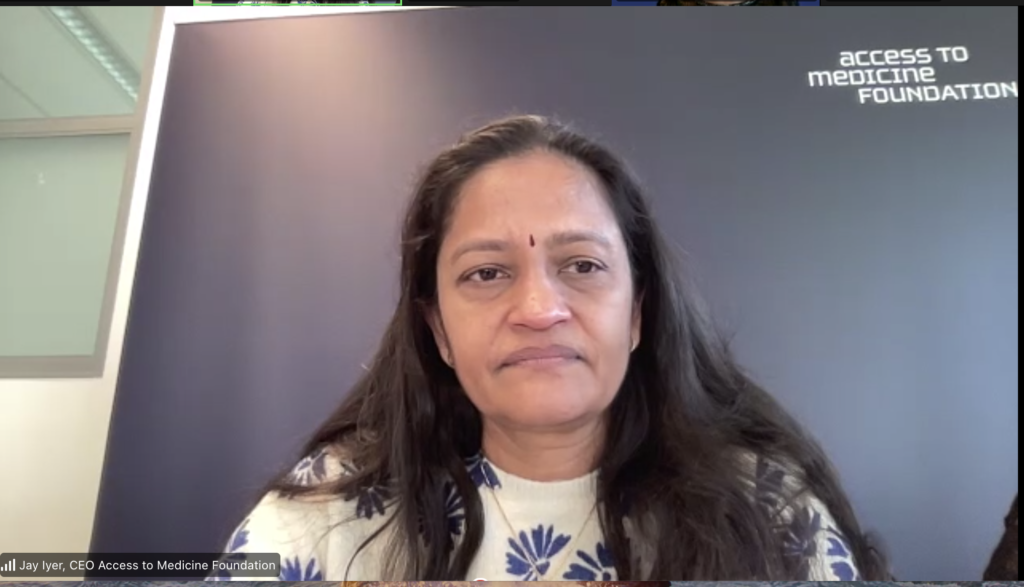
Jayasree K. Iyer, chief executive of the Access to Medicine Foundation, said the industry’s progress was uneven, at a time when cuts to international aid and growing pressure on pharmaceutical companies to prioritise their home markets threaten earlier gains.
“The promise of scientific innovation only means something if it reaches everyone who needs it,” she said during a virtual press conference to launch the report.
The Index, now in its 10th edition, examines how 20 of the world’s largest pharmaceutical companies make their medicines available and affordable in developing countries.
Its findings come as African countries face a growing burden of cancer, diabetes and cardiovascular diseases, conditions that often require expensive medicines and long-term treatment.
Cancer is among the clearest examples of the divide. Pharmaceutical companies continue to invest heavily in new cancer medicines, yet many patients in poorer countries cannot afford the drugs or the tests and hospital services needed to use them.
The report found that only 19 per cent of the cancer products assessed had access strategies covering low-income countries.
Even where a manufacturer offers a lower price, the cost of diagnosis, laboratory investigations and treatment can still put the medicine beyond a patient’s reach.
In Uganda, there has been some progress. Bristol Myers Squibb has begun supplying nivolumab, a medicine used to treat certain cancers, to the Uganda Cancer Institute through a publicly funded procurement arrangement.
The arrangement offers a route to treatment for patients who might otherwise struggle to afford the medicine. But how many Ugandans have benefited remains unclear.
In separate written responses, the Access to Medicine Foundation said details of patient numbers, eligibility requirements and treatment costs had not been publicly disclosed.
Uganda has also recorded the highest number of registration filings for newer medicines among 26 low-income countries assessed, with six filings. It held the same position in 2024.
That is progress, although registration alone does not guarantee that a medicine will reach a hospital or become affordable to patients.
The problem extends to medicines that have been available for decades.
The Index identified 25 diabetes research projects across six pharmaceutical companies, with much of the attention directed towards newer GLP-1 treatments. Meanwhile, access to insulin remains a struggle for patients in poorer countries.
Claudia Martinez, who presented the findings, warned that the industry’s enthusiasm for newer treatments should not undermine access to medicines patients already depend on.
She said gaps remained in insulin access and that companies needed to ensure newer therapies did not come at the expense of established treatments.
Africa’s dependence on imported medicines presents another challenge.
Of 45 pharmaceutical technology transfers assessed across 16 companies, only a small proportion took place in Africa, mostly in South Africa.
Technology transfers enable local manufacturers to acquire the knowledge and processes needed to produce medicines. Without more such partnerships, much of the continent will continue relying on products manufactured elsewhere, leaving supplies vulnerable to international disruptions.
The report also found that more pharmaceutical companies are taking responsibility for improving access. Seventeen of the 20 companies assessed now assign board-level responsibility for access targets, up from six in 2014.
Some have introduced new business models intended to supply poorer markets sustainably, rather than relying on charitable donations.
Yet the foundation says companies still need to demonstrate how many patients they are reaching, which medicines they are supplying and whether those treatments are becoming more affordable.
That distinction matters in Uganda, where the growing number of medicine registrations and international partnerships offers some encouragement, but provides only part of the picture.
A medicine approved for sale, included in an access plan or supplied through a new partnership is not necessarily one that a patient can obtain.
Two decades after the Access to Medicine Foundation began tracking the industry, the central concern remains how to turn pharmaceutical progress into treatment that patients in the poorest countries can actually afford.