7 Ugandan Musicians Who Built Institutions, Not Just Hits
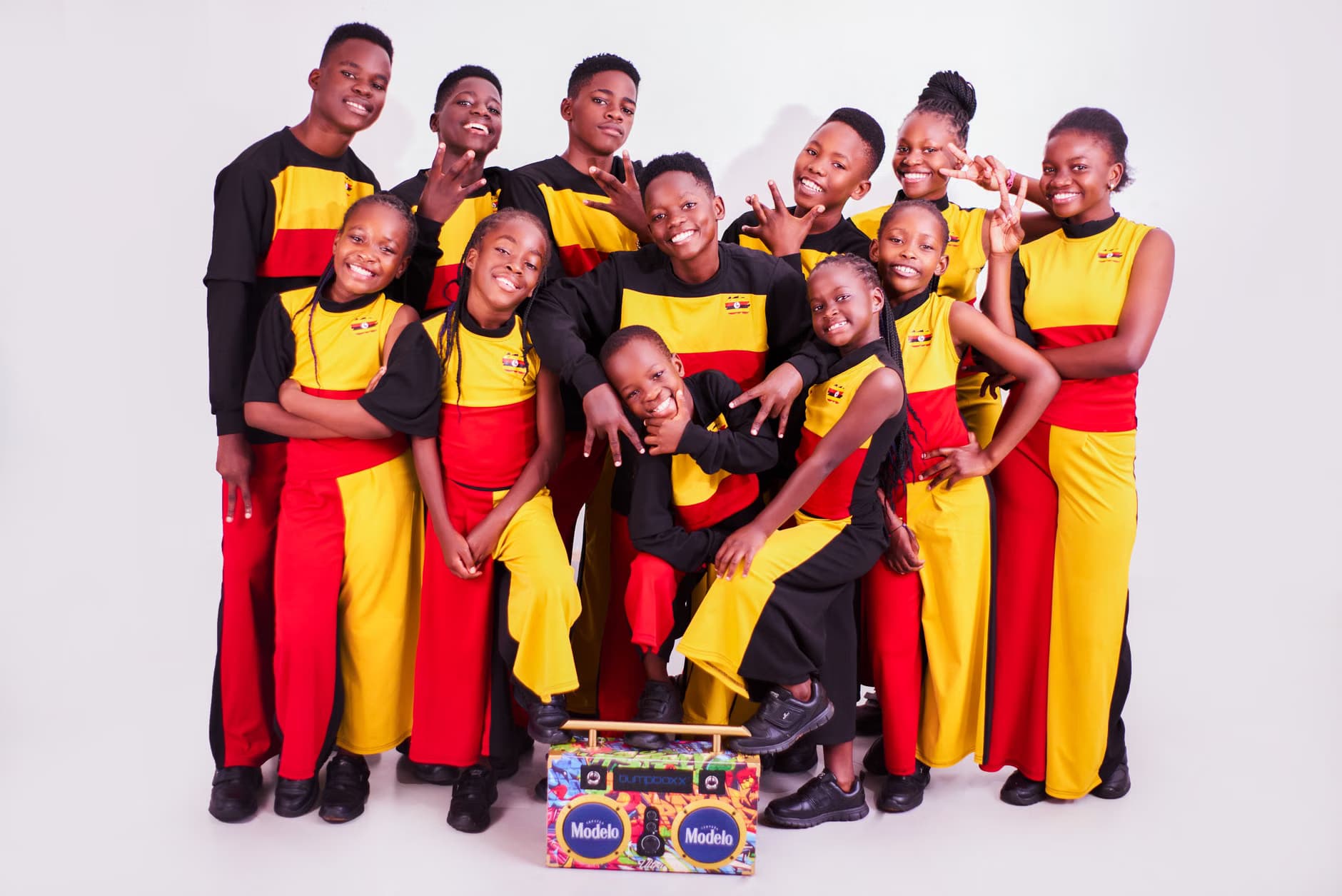
When Eddy Kenzo‘s “Sitya Loss” went viral in 2014, powered by that now-famous clip of the Ghetto Kids dancing in matching outfits, he became something rare: a Ugandan musician who broke through to international attention on the strength of one unforgettable video. A BET Award followed in 2015. A Nickelodeon Kids’ Choice Award in 2018. Four albums in the catalogue, including Roots and Made in Africa. That career alone would have been enough.
What Kenzo also did was found the Uganda National Musicians Federation, a body designed to represent an entire industry. Not his corner of it. All of it.
That second move is the one this list is about. Uganda has no shortage of musicians with loyal followings, sold-out shows and decades of recordings behind them. What’s rarer is the artist who looks beyond their own catalogue and builds something other people can use: a school, a foundation, a studio, a church, a federation. The seven below did exactly that. Their music earned them the platform. What they built with it is the real story.
7. Jackie Akello
You may know Jackie Akello from “Amari”, her love ballad that found audiences far beyond northern Uganda, or from “Apwoyo”, the war-themed pop hit that draws directly from Acholi suffering during the LRA conflict. Or from “Samanya”, a gospel collaboration with Levixone. She sings in Acholi, Luganda, Swahili, and English, and her music reflects a specific place and a specific history.
But in 2017, Akello also launched Village Belle, a coffee brand. She is an Acholi from northern Uganda, and most of her songs talk about the suffering of the Acholi both during and after the Lord’s Resistance Army war that left Acholi communities displaced for years. Building a business anchored in northern Uganda is another form of the same creative impulse. She did not separate the artist from the entrepreneur. She let them grow from the same ground.
Village Belle and the music catalogue sit beside each other without contradiction. One gives her community a voice on record. The other gives them a product in the market. Both come from the same Acholi root.
6. Babaluku
Babaluku, born Silas Babaluku Balabyekkubo, is one of the people credited with bringing Lugaflow into mainstream Ugandan music. Lugaflow is rap performed in Luganda, and if it has the reach it does today, part of the reason is Babaluku’s early work as a member of the Bataka Squad.
In 2008, his journey was documented in Diamonds in the Rough: A Ugandan Hip-hop Revolution, a film that tracked him and his crew from early performances in Uganda through to festival stages in the United States. That is international attention earned through craft, not connections or marketing spend.
What Babaluku chose to build alongside his music career is the Bavubuka Foundation, an organisation built around equipping Ugandan youth with leadership skills. Bavubuka means “youth” in Luganda. The name makes the mission clear: this is not a vanity project tied to his personal brand. It points outward, toward the next generation. A Lugaflow pioneer who decided the most important legacy was not a discography, but a framework for young people to lead.
For more on the musicians who built the Lugaflow movement, see Uganda’s hip-hop and Lugaflow pioneers.
5. DJ Rachael
DJ Rachael, born Rachael Ray Kungu, has been working in Ugandan music for over 25 years. That kind of longevity is a statement in itself: disc jockeys do not last a quarter century without knowing exactly what they are doing.
But the institutional side of her career is what earns her this spot. She is the founder of Femme Electronic, a platform that points explicitly toward creating space for women in a genre that has not always centred them. She is also the proprietor of Scraych Rekords, a private audio studio she built and runs.
Two structures, not just a career. Femme Electronic answers a question about who gets to be at the front of Uganda’s electronic music scene. Scraych Rekords gives artists a place to record. Both exist because DJ Rachael built them, and both will keep existing after any one performance date passes.
4. Okello Sam
Here is what Okello Sam built: a school.
Okello Kelo Sam is a Ugandan musician, actor, and comedian. That range of skills has made him a recognisable figure in entertainment across several formats. He could have stayed there. Instead, he founded Hope North, a secondary school and sanctuary built specifically for young Ugandans who survived the civil war in the north of the country.
A secondary school requires land, buildings, teachers, a curriculum, ongoing operations, consistent funding. It is not the kind of thing you announce and walk away from. It demands sustained commitment over years. Sam made that commitment. Hope North is not a charity event or a fundraiser with his name on it. It is a school that serves young people specifically because of what they survived. Students go there. Teachers report for work there. That is the scale of what he chose to build, and it is a harder thing to sustain than any performance schedule.
3. Desire Luzinda
Desire Luzinda has had a career as a Ugandan recording and performing artist spanning many years. On 5 June 2021, she added something else to her resume: founder.
That date marks the official establishment of the Desire Luzinda Foundation International, known as DLFI. Her Wikipedia entry describes her as a “recording, performing artist, philanthropist, and founder.” That last word matters. Not a donor, not an ambassador, not a supporter. A founder. She built a structure.
Creating a named foundation gives philanthropic work a mandate, an address, and a continuity that outlasts any single charitable act. The DLFI is that structure. Luzinda’s work on stage and in the studio built her the audience. What she did with that platform on 5 June 2021 is what puts her on this list. The date matters because it marks a decision, not a vague intention: she established something formal, with a name and a founding date on record.
2. Wilson Bugembe
When Wilson Bugembe sings, people in a congregation sing back. That is not a metaphor. It is the literal reality of his work as founder and senior pastor of Worship House, a mega church located in Nansana, Wakiso District.
Bugembe is a Ugandan pastor and gospel singer. The two roles are not in tension in his case; they are the same project. The music he makes is ministry, and the ministry he leads is expressed through music. But founding and running a mega church places him in a different category from an artist who records gospel albums. He built the space people worship in. He oversees the congregation, week after week.
The church came from the music, but the church is now bigger than any individual song. That is exactly the kind of institution this list is tracking.
Uganda’s gospel scene has produced some remarkable institution builders. For more on the artists who shaped it, read how Uganda’s gospel artists conquered far beyond the choir.
1. Eddy Kenzo
Back to where we started. Eddy Kenzo, born Edrisah Kenzo Musuuzah, had everything he needed to justify a career spent entirely on his own music. The BET Award in 2015. The Nickelodeon Kids’ Choice Award in 2018. Multiple All Africa Music Awards. The “Sitya Loss” viral moment that introduced a generation of international viewers to Ugandan talent. An album called Made in Africa in 2021 that said exactly what it meant.
Kenzo is also a music executive and a member of Big Talent Entertainment. But the thing that plants him at the top of this list is the Uganda National Musicians Federation, which he founded and leads as president.
A national musicians federation is not a personal brand play. It is an attempt to represent an industry: to give musicians collective standing, to address shared issues, to build infrastructure that helps artists who will never have a BET nomination. That kind of work is unglamorous, slow, and often thankless. Kenzo took it on anyway.
That is the distance between an artist and an institution builder. Kenzo has been both.
His breakthrough single “Stamina” started the journey. “Sitya Loss” took it global. The Uganda National Musicians Federation is what he built when he looked beyond his own spotlight and asked what the whole industry actually needed.
These seven are not exceptions. They are a pattern: Ugandan artists who used their platform to build something others can walk into, enrol in, record at, or be represented by. The hits were the beginning. The institutions are what lasts. When you look at the Ugandan entertainment landscape this way, the most important people in it are not always the ones currently leading the charts. Sometimes they are the ones laying the foundation under it.
If you’re curious about the wider range of Ugandan entertainers who’ve built careers beyond a single lane, see how Uganda’s entertainers built multi-lane careers. For more coverage of Uganda’s music, sport, comedy and media world, the full Wolokoso desk is right here.