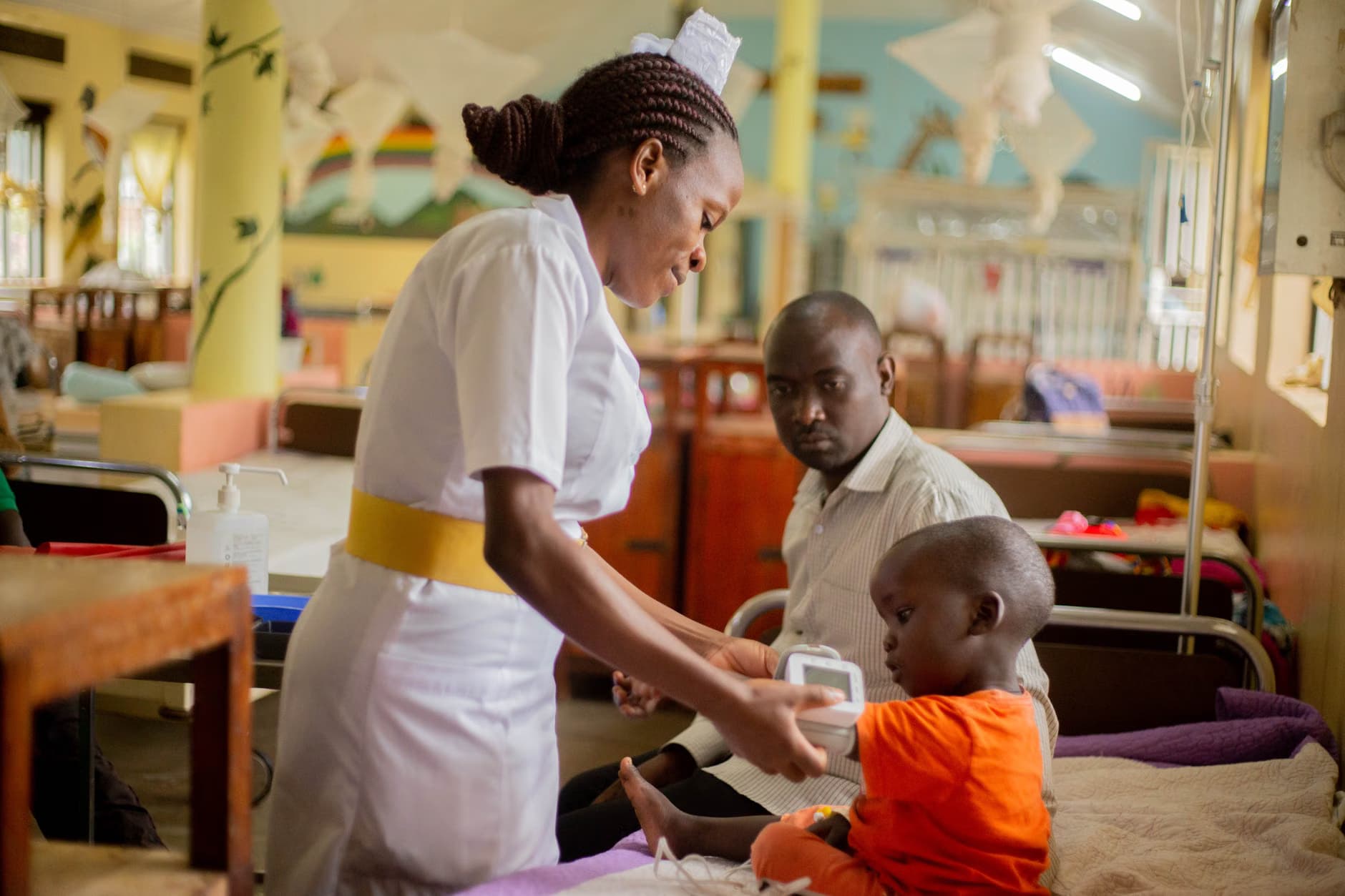
A medical officer finishing internship at Mulago this year and a secondary-school classmate who became a relationship manager at a city bank will, within three years, be living on very different numbers. Both studied hard. Both work long hours. One of them, though, can double their income by adding a night shift at a private clinic or a weekend locum somewhere else in town. That second fact is the real story of doctor pay in Uganda right now, more than any single salary figure.
Here’s what the numbers actually show, sector by sector, and why “doctor” is really three different jobs with three different paychecks.
Three employers, three very different deals
Ask a Ugandan doctor what they earn and the honest answer is almost always “it depends which employer, and sometimes more than one.” The profession splits into three broad tracks:
- Government (public service): posts graded on the civil service’s U-scale, from entry medical officer up through senior consultant grades, filled and advertised by the Health Service Commission.
- Private hospitals and clinics: pay set by the employer, usually higher for specialists, with far less job security than government.
- NGOs, donor-funded programmes and mission hospitals: often the best-paid of the three for mid-career doctors, but contracts run on project funding cycles rather than permanent terms.
Most senior doctors in Kampala end up touching more than one of these at once. That is not a side note. It is the single biggest driver of what a Ugandan doctor actually takes home.
The government payslip: steady, graded, and quietly under scrutiny
A new public service salary structure took effect on 1 July 2026, and government has been explicit that doctors, teachers and other scientists are the priority group for raises, ahead of generalist administrative staff. What that means in shillings for each grade has not been published in a single clean table, so treat any specific figure you see online with caution and check the Health Service Commission’s current adverts for the grade you’re targeting.
An earlier reform round, reported in local press before the 2026/27 structure, proposed roughly these monthly figures for medical officers: around Shs5 million at entry grade, Shs5.5 million for a senior medical officer, dental surgeon or pharmacist, and Shs7.4 million for a special-grade medical officer. Those were proposed numbers at the time they were reported, not a confirmed figure still in force today, so use them only as a sense of scale, not a promise.
What’s less flattering: in March 2026, the Observer reported government officials openly questioning whether the pay increases doctors have received are buying better service delivery, pointing specifically at dual employment and absenteeism. Translation: the government itself knows a large share of its medical officers are also working elsewhere, and isn’t thrilled about it. If you’re planning your own career around a government post, go in assuming that moonlighting is common, quietly tolerated in practice, and increasingly watched on paper.
Private practice: where the real spread opens up
Private-sector pay for doctors in Uganda is far less standardised, and the gap between a general practitioner and a specialist is where most of the headline numbers come from. Self-reported market data from Payscale puts the average medical officer at roughly UGX 28 million a year (about UGX 2.3 million a month), with a wide band from UGX 4 million to UGX 48 million depending on experience and employer. General practitioners come in slightly lower, averaging around UGX 24 million a year. Treat these as rough market signals rather than payroll fact: they’re crowdsourced, not audited.
Specialists at the handful of major private hospitals in and around Kampala are a different conversation entirely. Industry job guides put consultant surgeons, cardiologists and similar specialists at these facilities earning somewhere between UGX 10 million and UGX 30 million a month, sometimes more once private consultations and procedures are added on top of a base contract. That range is a secondary estimate, not a confirmed payroll figure, but it lines up with why a general surgeon with ten years in and a private clinic on the side lives nothing like a first-year medical officer.
One useful rule of thumb from wage-comparison data: public-sector pay in Uganda tends to run roughly 25% above private-sector pay for comparable professional roles. For junior and mid-level doctors, that often holds. For senior specialists, private practice usually wins once consultations and procedures are factored in, which is exactly why so many senior government doctors also run a private clinic afternoon.
What that actually looks like on the ground
Picture three real career paths, not three abstract numbers. A medical officer at Mulago National Referral Hospital sits on a government grade, treats the heaviest case load in the country, and has access to specialist training rotations that smaller facilities can’t offer. A general surgeon at a private tertiary facility like Case Hospital or International Hospital Kampala works a leaner roster, sees a different mix of paying and insured patients, and negotiates pay directly with the hospital rather than against a fixed scale. A public health doctor on a USAID- or Global Fund-backed programme in Gulu or Mbarara earns a project salary that can beat both, right up until the grant ends and the post with it.
None of these is simply “the better job.” Government gives you a scale, a pension track and the training exposure that builds a specialist career. Private gives you higher ceiling pay once you’ve built a reputation and a patient list, but almost no safety net if the hospital restructures. NGO work gives you the strongest short-term pay for mid-career public-health specialists, but the weakest long-term certainty. Most doctors who do well financially in Uganda aren’t the ones who picked correctly between these three. They’re the ones who used one to fund training into a specialisation, then used the specialisation to negotiate better terms wherever they landed next.
NGOs and mission hospitals: the quiet third option
Donor-funded health programmes and larger mission hospitals frequently pay mid-career doctors better than either government or a small private clinic, especially for roles with a public health, HIV, or maternal health focus tied to a funded project. The trade-off is contract length: these posts run on grant cycles, often one to three years, and can disappear when funding does. If you’re weighing an NGO offer against a government post, ask directly how many funding cycles the programme has already survived, not just what this year’s contract pays.
What actually moves your number
Strip away the sector labels and five things explain almost all of the spread between one doctor’s pay and another’s:
- Postgraduate specialisation. A plain MBChB medical officer and a trained surgeon, anaesthetist or obstetrician are not competing for the same pay band, in any sector.
- Grade and years of service on the government side, since promotion up the U-scale is the main lever for a salaried public post.
- Whether you hold more than one job. A government post plus weekend locum work or a private clinic afternoon is the most common way doctors in Uganda raise their real income, even if it’s rarely stated out loud in a job advert.
- Location. Kampala’s private hospitals pay more than regional facilities, but government grades and allowances are designed to pull doctors toward harder-to-staff regions, so a rural posting isn’t always the pay cut it looks like on paper.
- On-call and night allowances, which can add a meaningful slice to a base government salary and are easy to undervalue when comparing two job offers side by side.
There’s a sixth factor nobody puts on a payslip: reputation. A specialist whose private patients trust them enough to follow them between hospitals effectively sets their own rate over time, in a way no government grade or NGO contract ever will. That’s less a salary negotiation than a slow build, usually over five to ten years, and it’s the main reason senior consultants in Kampala’s private sector can be earning multiples of what a newly promoted government specialist takes home for the same qualification.
The practical takeaway
If you’re a medical student or intern trying to plan a career, the honest advice is this: don’t pick government or private. Most successful Ugandan doctors end up building both, a stable graded post for security and progression, plus private or locum work for the income that actually moves the needle. Decide early which specialisation you’re aiming for, since that single choice will do more to your lifetime earnings than which hospital logo is on your first contract.
For the tax side of that payslip, our guide to PAYE and NSSF deductions breaks down what actually lands in your account versus your gross pay. If you’re still deciding whether medicine is the right sector at all, our healthcare and pharma sector guide covers the wider job market beyond doctors, including nursing, lab science and pharmacy, and our nurse salary breakdown shows how the same public-versus-private gap plays out one rung down the ward.
Current openings for medical officers, specialists and health programme roles are posted continuously on Kampala Index Jobs, and more sector guides like this one are collected on Kampala Index Career Tips. For the official word on your specific grade, go straight to the Commission’s own adverts rather than a recruiter’s estimate, verify tax treatment with the Uganda Revenue Authority, and check sector policy directly with the Ministry of Health before you negotiate anything.