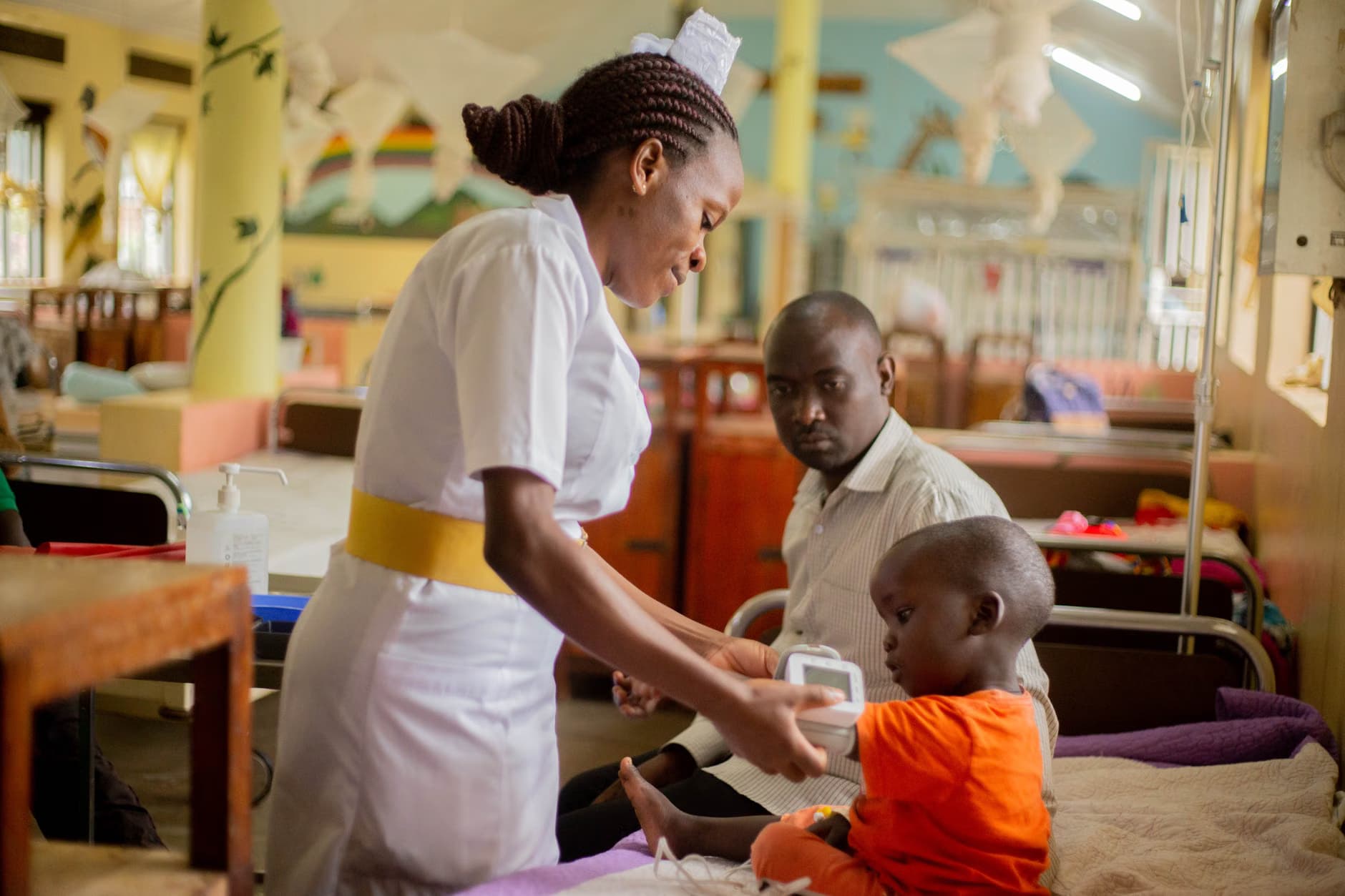
A fresh enrolled nurse graduating this month from one of Kampala’s nursing schools will likely start on a monthly salary that her secondary-school classmate, now a teller at a city-centre bank, earns in roughly two weeks. Same age, same number of years in training, wildly different paycheck. That gap is the real story of nursing pay in Uganda right now, and it comes down to three questions: what qualification you hold, who signs your contract, and whether you work the ward or the boardroom clinic.
Here’s what the numbers actually show once you strip away the recruiter hype and the “competitive salary” line in every advert.
Two ladders, not one: enrolled vs registered
Uganda’s nursing cadres split into two tracks, and pay follows the split almost exactly.
- Enrolled nurses (certificate or diploma-trained, the bulk of ward staff in regional and private hospitals) sit, on average, around UGX 1.2 million a month, according to PayScale’s 2026 Uganda data. WageIndicator’s broader range for this associate-level nursing cadre runs from roughly UGX 494,500 to UGX 2.74 million, depending on employer and years on the job.
- Registered nurses (degree-trained, usually BSc Nursing) start in a similar band to enrolled nurses early on, but the ceiling is far higher. PayScale puts mid-career registered-nurse pay at around UGX 3.2 million a month, and WageIndicator’s professional-nursing range stretches up to roughly UGX 3.38 million at the senior end.
So the qualification gap alone can be worth over UGX 2 million a month by mid-career. That’s before you factor in who’s actually paying you.
Why pay is actually under pressure right now
This isn’t an abstract debate. Uganda is short-staffed in nursing, badly. A 2026 journal analysis puts the national nurse-to-population ratio at around 3.8 per 10,000 people, well under the WHO benchmark of 10 per 10,000. Separate 2026 reporting puts the gap at roughly 11,000 nurses and 13,000 midwives the country needs to hire just to meet demand, and the Health Ministry has said some lower-level health centres run at only 39% of their approved staffing levels. Government responded by approving funding to recruit 16,963 additional health workers in the FY2026/27 budget, the single biggest health-sector hiring push in years.
For a job-seeking nurse, that shortage is leverage. Facilities that are desperate to fill a ward roster have far less room to lowball an offer than the “competitive salary” line in the advert suggests. If a recruiter tells you the number isn’t negotiable, ask how many vacant posts the unit currently carries. More often than not, the answer explains a lot.
Government pay: slow to move, but it moved in 2026
Uganda’s public service groups entry-level enrolled nurses, primary teachers and police constables in similar lower cadres, historically among the least generous rungs of the civil service ladder. That changed to some degree this year. Circular Standing Instruction No. 3 of 2026 revised the public service salary structure effective 1 July 2026, and the overall wage bill jumped from Shs8.621 trillion to Shs9.708 trillion, an increase of Shs1.088 trillion, with health workers named as one of the priority groups.
How far that reached the nursing cadre specifically is still murky in the published figures, but the scale of the health-sector adjustment is visible elsewhere in the same circular: a mortuary and X-ray attendant post, several rungs below a registered nurse, rose from Shs224,066 to Shs1.1 million a month. If entry-level support staff moved that much, enrolled nurses on the same Single Spine scale almost certainly saw a real increase too, even if the exact gazette figure isn’t yet public.
The honest answer for a job-seeker: ask HR for the specific salary scale and grade before you accept a government or parastatal hospital post. Circulars set the policy; the facility’s own payroll office has the number that matters to you.
Midwives and the bridging route from enrolled to registered
Midwifery runs on a near-identical structure to nursing, licensed through the same Uganda Nurses and Midwives Council, with enrolled midwives tracking enrolled-nurse pay and registered midwives tracking registered-nurse pay. The single biggest lever an enrolled nurse or midwife has over their own future earnings is the bridging programme: a part-time or evening upgrade course, offered through institutions like Mulago Schools of Nursing and Midwifery and several regional nursing schools, that converts a certificate or diploma into a BSc. It typically takes two to three years alongside work, and it is the most reliable route from the lower pay band into the one with a genuinely higher ceiling. Ask your current employer whether they’ll give you study leave or a timetable that allows evening classes before you assume you’d have to resign to upgrade.
Private and mission hospitals: wider swings than you’d expect
Private-sector nursing pay isn’t one market, it’s several. At the low end, a 2026 listing for an enrolled nurse at the Uganda Tea Corporation’s estate clinic advertised Shs250,000 to Shs300,000 a month, well below even the conservative PayScale average, because estate and agro-industry clinics often bundle housing or meals into a lower cash figure. At the other end, well-run mission hospitals and larger private facilities in Kampala and regional towns pay closer to or above the PayScale average, particularly for registered nurses with theatre, ICU or midwifery specialisation, which are chronically short-staffed. Uganda’s healthcare sector is hiring well beyond the wards, and specialised nursing skills are one of the few places in the market where you can genuinely negotiate.
International NGOs: the gap nobody advertises loudly
Uganda hosts a large footprint of international health NGOs and donor-funded programmes, running everything from HIV clinics to emergency nutrition response. These organisations typically pay on their own internal scales, set in reference to international non-profit benchmarks rather than Uganda’s domestic hospital or public-service grids, and the uplift over a standard ward salary is usually substantial enough that experienced registered nurses actively seek out programme-nurse, clinical mentor or health-systems roles with these organisations once they have a few years of ward or theatre experience behind them. The trade-off is contract-based employment, often tied to donor funding cycles, so the higher pay comes with less job security than a government or well-established private-hospital post. It’s worth weighing both sides rather than chasing the headline figure alone.
The option most nurses never apply for: corporate occupational health
Large employers outside healthcare run their own staff clinics, and they need qualified nurses to run them. MTN Uganda and Airtel Uganda both maintain occupational-health functions for thousands of staff and contractors, and corporate medical or wellness-coordinator roles for nurses typically run on the company’s general pay grid rather than a hospital nursing scale. That usually means better hours (no 12-hour night shifts), formal leave and a salary set by corporate HR bands rather than a ward budget. It’s a smaller, more competitive pool of jobs, but it’s worth watching for anyone with a few years of clinical experience and a steady hand with paperwork.
What actually lands in your bank account
Whatever the gross figure on your offer letter, the Uganda Revenue Authority‘s PAYE bands and your mandatory NSSF contribution both bite before the money is yours. On a gross salary of roughly Shs1.2 million, expect about Shs248,250 in PAYE, since everything above the Shs335,000 tax-free threshold is taxed, plus a 5% employee NSSF contribution of Shs60,000 (with your employer adding 10% on top, into your own retirement savings, not lost money). That leaves roughly Shs891,750 in take-home pay. We’ve broken down exactly where that 2026 payslip math lands if you want the full worked example rather than a rule of thumb. Either way, even the lowest verified nursing salary in this piece sits well above Uganda’s gazetted minimum wage floor, which remains a nominal Shs6,000 a month and hasn’t moved in decades, so “minimum wage” is not the right benchmark for judging whether a nursing offer is fair.
Four questions worth asking before you sign
Whichever sector you’re negotiating with, these are the questions that separate a real number from a recruiter’s guess:
- Is this gross or net? A quoted figure that sounds generous can quietly be the gross amount before PAYE and NSSF, which on a mid-range nursing salary can shave off a meaningful slice.
- Is housing, transport or a duty allowance included or separate? Many hospital and NGO contracts bundle these in; estate and private clinic contracts (like the Uganda Tea Corporation example above) often fold housing into a lower headline cash number.
- What shift pattern does the number assume? A ward salary quoted for rotating 12-hour shifts, including nights and weekends, is not comparable to a Monday-to-Friday corporate clinic role at the same figure.
- Is NSSF actually being remitted? Ask for proof of remittance, not just a promise. It’s your retirement money, and not every small private clinic is diligent about paying it over.
The myth worth killing
The idea that “nurses all earn the same, it’s a vocation, not a career” doesn’t survive contact with the data. A registered nurse with ICU experience at a well-run private facility can out-earn a bank teller. An enrolled nurse on an estate clinic contract can earn less than a boda rider on a good month. The qualification you hold, the sector you choose, and whether you ever apply for a corporate clinic role instead of another hospital ward, together explain almost the entire spread. Ask for the written scale before you sign, not after.
Ready to see what’s actually open right now? Browse current openings on Kampala Index’s jobs board, including hospital, NGO and corporate health postings as they’re listed.