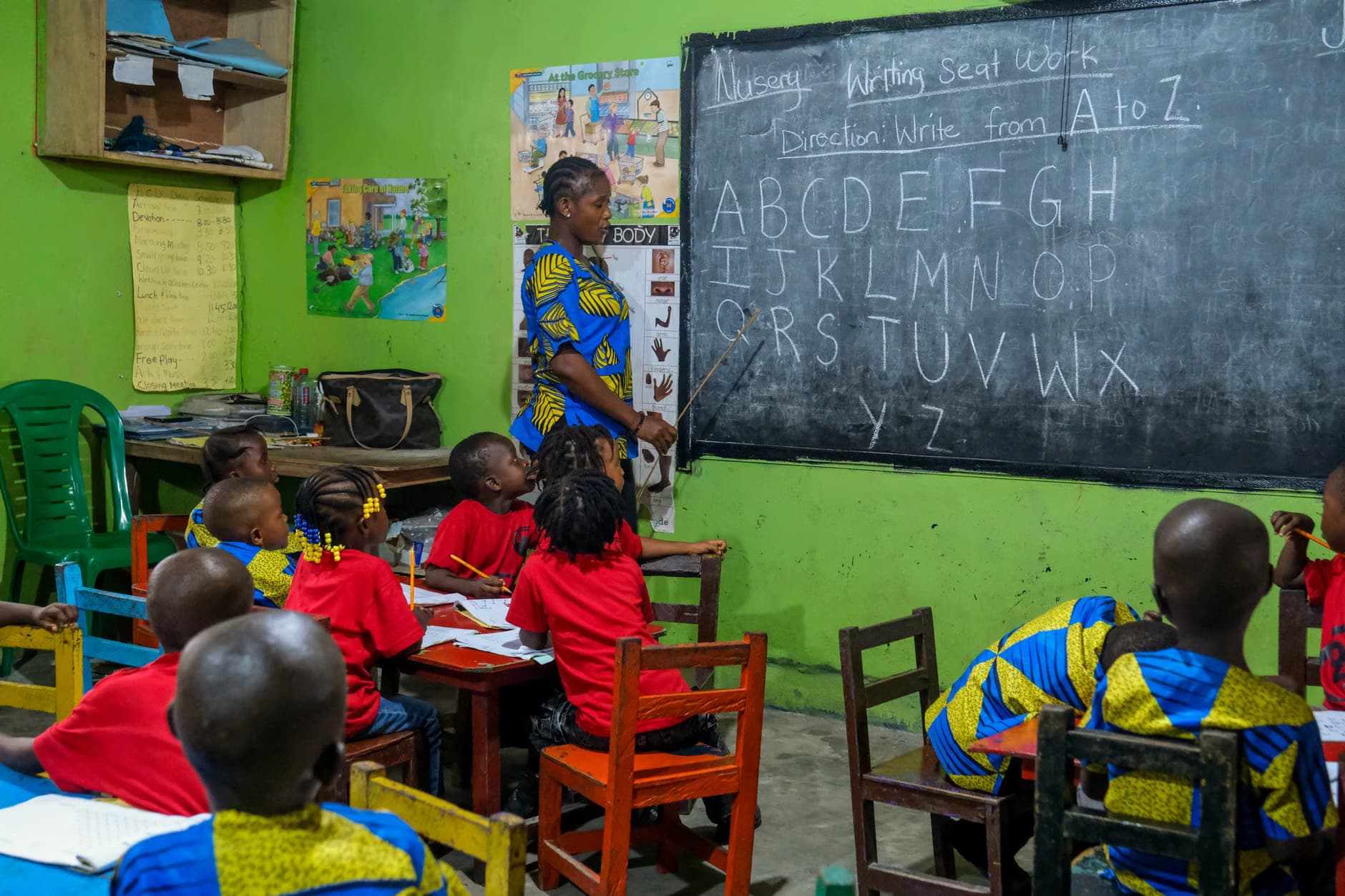
A primary school teacher in Mukono spent most of 2025 on strike over a salary increment the government had promised back in 2019. By July 2026, her payslip finally moved, from roughly 500,000 to roughly 700,000 shillings a month. Across town, a geography teacher at a private secondary school was already earning three times that, with no circular, no strike and no union needed. “Teacher salary Uganda” hides two completely different professions behind one job title, and the gap between them is the whole story.
So here’s what the 2026 pay rise actually changed, what it left untouched, and what a teacher’s payslip looks like once URA and NSSF have taken their share.
What the 2026 circular actually did
The Ministry of Public Service’s salary structure for the 2026/27 financial year, implemented under Circular Standing Instruction No. 3 of 2026 and backed by an extra 568.65 billion shillings in the national budget, raised pay for government-employed primary teachers and secondary arts teachers from 1 July 2026. The reported shifts:
- Grade III teachers / Education Assistants (primary): roughly 500,000 up to roughly 700,000 UGX a month.
- Head teachers (primary): roughly 1,000,000 up to roughly 1,500,000 UGX.
- Deputy head teachers: roughly 750,000 up to roughly 1,400,000 UGX.
- Arts education officers (secondary): raised by roughly 500,000, though many still sit under 2,000,000 UGX even after the increase.
- Science teachers (secondary): already over 4,000,000 UGX for qualified subject specialists, unaffected by this round since the shortage premium was set earlier.
That science-versus-arts gap isn’t new. Government has run a standing premium for maths, physics and chemistry teachers for years, because so few qualified people apply for those posts that schools would otherwise go without them. Humanities and primary teachers carried the weaker hand in that negotiation for over a decade, which is exactly why the 2025 strike happened and why this increment, modest as it looks next to a private-sector payslip, counts as a genuine win for the people who got it.
Government pay is a scale. Private pay is a market.
Here’s the part that trips people up when they compare “teacher salary” across two job ads. A government post comes with a fixed scale, a pension, and job security that rarely gets touched even when the budget is tight. A private school sets its own number, and that number varies enormously by the school’s fees, not by the teacher’s subject.
Mid-tier private secondary schools in and around Kampala have advertised subject-teacher roles, geography, business studies, PE, in the 2,000,000-3,000,000 UGX range as of November 2026. That’s already triple a Grade III teacher’s new government salary, before you even reach the schools charging international fees.
At the handful of true international schools around Kampala, expatriate and local-hire teachers with a recognised teaching licence have had postings advertised around USD 1,900-2,000 a month, which converts to roughly 7.8-8.2 million UGX at November 2026 exchange rates, on top of packages that commonly include flights, medical insurance, housing allowance and school places for a teacher’s own children. Those posts almost always ask for a bachelor’s degree, a teaching licence from a recognised body, and two or more years of classroom experience, and the competition for them is real. For most Ugandan-trained teachers, though, the realistic private-sector ceiling sits closer to that 2,000,000-3,000,000 band, not the expat-track one.
The allowance most new teachers don’t know to ask about
Government teachers posted to officially designated “hard-to-reach” areas, places picked for geographical isolation, insecurity, poor roads or thin social services under the Public Service Reform Programme, have historically qualified for a hardship allowance reported at around 30% on top of the base salary. It’s worth asking about explicitly at posting, because the list of qualifying districts is genuinely contested right now: in a parliamentary session this November, MPs pointed out that teachers in parts of Kabale who reach school by canoe, and teachers on the Kaberamaido peninsulas who travel by boat, aren’t on the list at all, while other districts are. If you’re posted somewhere with a real transport or security hardship and nobody mentions this allowance, ask your district education office directly rather than assuming it doesn’t apply.
The qualification that actually gets you hired
Every teaching post in Uganda, government or private, ultimately traces back to one body: the Education Service Commission, which grades, registers and recruits teachers for the public system and sets the credential floor the private sector borrows from. A Grade III Teaching Certificate from a recognised institution, plus registration with the Ministry of Education and Sports, is the baseline for a primary post. Secondary posts ask for a bachelor’s degree in education, or a bachelor’s degree paired with a postgraduate diploma in education for graduates who studied a subject first and added teaching skills afterward. Head teacher posts add years of classroom experience and, increasingly, evidence of administrative or supervisory responsibility.
Applications for government posts run entirely through the ESC’s e-recruitment portal, and the Commission is explicit that none of its services carry a fee. If anyone asks you to pay to “process” a teaching application, that’s not how the system works. Private and international schools set their own hiring bar on top of the same base qualifications, which is why a PGDE or a specific subject specialism (science, especially) does more for your pay than years of service alone.
What URA and NSSF take before the number on the circular reaches your account
The gross figures above are not what lands in anyone’s bank account. NSSF takes 5% of gross pay directly off a teacher’s payslip, while the employer separately contributes another 10% into that teacher’s retirement savings without touching take-home pay. On top of that, PAYE bands, which changed on 1 July 2026 when the tax-free threshold rose from 235,000 to 335,000 UGX, now run:
- 0-335,000 UGX: nil
- 335,001-410,000 UGX: 20% of the amount above 335,000
- 410,001-485,000 UGX: 15,000 + 25% of the amount above 410,000
- 485,001-10,000,000 UGX: 33,750 + 30% of the amount above 485,000
- Above 10,000,000 UGX: the above, plus a 10% surcharge on the excess over 10,000,000
Take the newly-raised Grade III teacher on 700,000 UGX gross. PAYE is charged on the full gross, not on pay after NSSF, so it comes to 33,750 plus 30% of the amount above 485,000, which is 98,250 UGX. NSSF removes another 35,000. Net pay lands at 566,750 UGX, about 19% below the headline figure, which is one reason the raise feels smaller on payday than it looked in the budget announcement.
Now take a private-school subject teacher on 2,200,000 UGX gross, mid-point of the advertised range. PAYE comes to 33,750 plus 30% of the amount above 485,000, which is 548,250 UGX, and NSSF removes another 110,000. Net pay lands around 1,541,750 UGX, close to 30% below gross. The higher the salary, the bigger that proportional bite, which is exactly why an offer that sounds impressive at interview can feel ordinary on the first payslip.
When a move actually pays off
If you’re trained and registered but stuck on the government scale, the honest trade-off is security against ceiling. The pension, the job stability and the structured promotion path are real, but the scale moves on government timing, not yours, and this year’s increment took a strike to arrive. Moving into private education resets that trade: better pay sooner, no pension unless the school runs its own, and your salary tied to that school’s fee collections rather than a national budget line.
Science and maths specialists have the strongest hand of anyone in this market right now, government or private, because the shortage premium follows them either way. If you teach a shortage subject and you’re still on an arts-level salary at a private school, that’s a conversation worth having with your head teacher before you start job-hunting elsewhere; schools that know they’re underpaying a scarce subject teacher will often move faster to keep you than to replace you.
The same 2026/27 budget line that raised primary and arts pay also covers BTVET instructors, the tutors teaching vocational and technical trades, and it’s worth watching that scale too if you hold a trade qualification alongside a teaching one. Progression within government teaching is slow but real: a Grade III teacher who upgrades to a diploma or degree in education qualifies for reclassification to a higher salary band, and years of service plus a clean disciplinary record are what the Education Service Commission looks at when head teacher and deputy head teacher posts open up. None of that happens automatically. You have to apply for the upgrade and for the post, the same way you applied for the job in the first place.
Where to actually look
Government postings move through the Education Service Commission’s portal on its own schedule, so set an alert rather than checking daily. For the wider picture of how Uganda’s public-sector hiring process actually runs once you’re shortlisted, our guide on what public-service interview panels really score is worth reading before you walk into an ESC interview. If you want the full breakdown of how PAYE and NSSF reshape any Uganda salary, not just a teacher’s, our payslip decoder walks through the maths in more detail. And if you’re weighing a second, qualification-driven profession the way an underpaid arts teacher might weigh accounting, our piece on what accountants in Uganda actually earn shows how far one extra credential can move a salary band in either field. Browse current teaching and education vacancies on Kampala Index Jobs, or explore more career guidance on Kampala Index Career Tips.