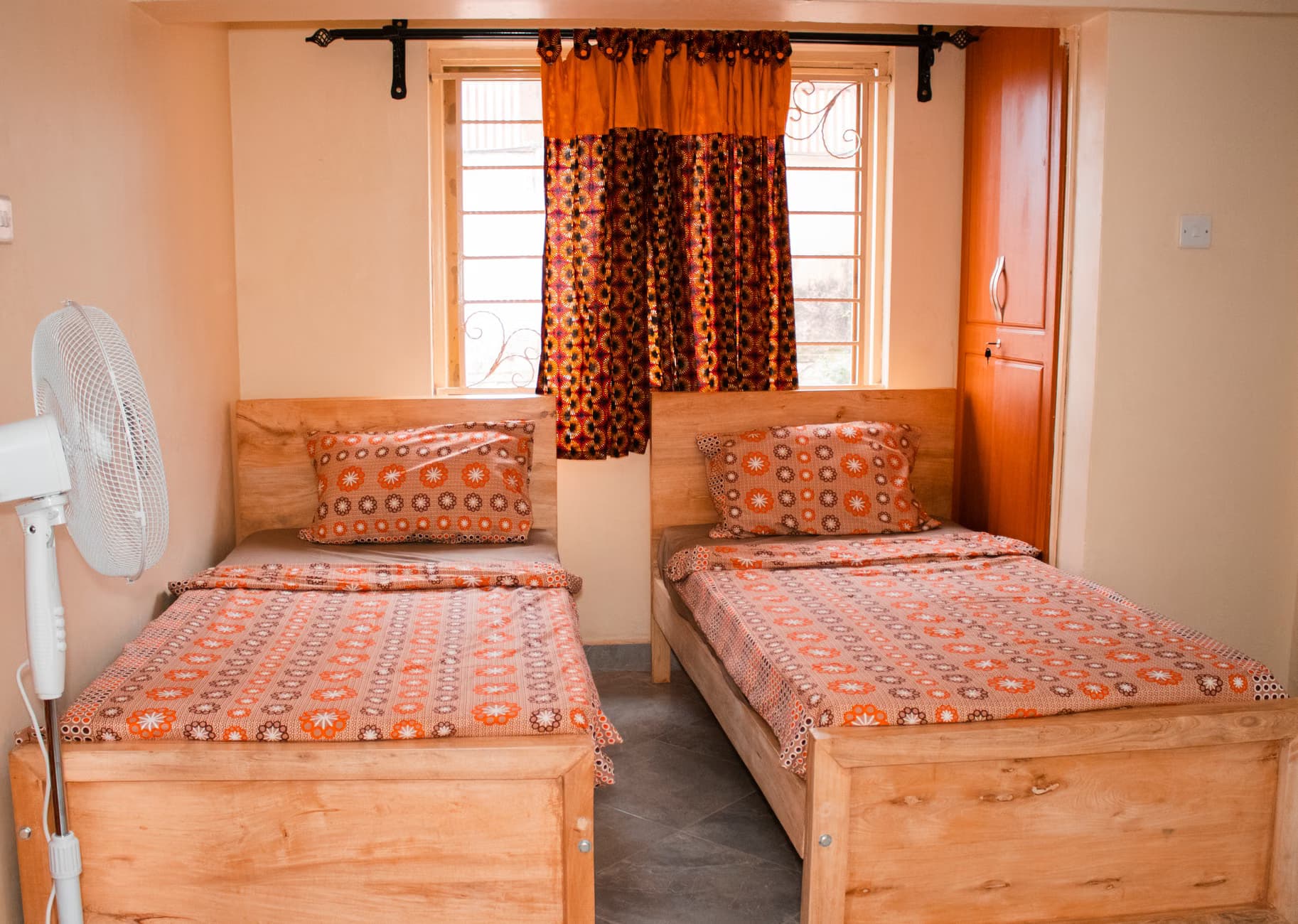
You’ve just signed for a one-bedroom in Ntinda or a bedsitter off Bukoto, paid two months’ deposit on top of the first month’s rent, and now you’re standing in a bare room wondering how to make it feel like yours without doing anything the landlord will deduct from that deposit when you leave. That tension is the real starting point for small apartment ideas in Uganda. It isn’t really about square metres. It’s about decorating a space you don’t own, under rules you didn’t write, without losing money on the way out.
Good news: the gap between “bare rental” and “home” closes mostly through furniture choices and removable decor, not renovation. If you want the full map of styles Kampala homes are taking right now, The New Look of Ugandan Homes: 7 Interior Design Styles Worth Exploring is the place to start; this piece narrows that down to what actually works in one small, rented room.
Know what the deposit actually covers first
Uganda’s Landlord and Tenant Act, 2022 requires a landlord to put in writing what a security deposit can be withheld for, and the standard practice most agents follow is a deposit in the range of one to two months’ rent held against damage, on top of rent paid in advance (the Act caps advance rent at three months unless both sides agree otherwise). The distinction that matters for decorating is between ordinary wear and tear, which a landlord bears, and actual damage, which you don’t. A faded patch of paint after a year is wear and tear. A hole left by a drilled shelf bracket is damage.
Two habits protect you regardless of what any single clause says: photograph every wall and fixture, dated, the day you move in, and tell your landlord in writing the moment anything is damaged rather than letting it sit quietly until move-out. Tenants are generally expected to flag damage promptly, not discover it’s suddenly an issue when the deposit is being settled. Kampala’s property press has covered just how often that settlement goes wrong in practice, and disputed deposit deductions are common enough to be worth guarding against from day one.
Decorate the walls without touching them
This is where most of the “will I lose my deposit” anxiety concentrates, and it’s also the easiest to solve. Skip the hammer and nails entirely for anything temporary:
- Lean, don’t hang. A large framed print or mirror leaned against the wall on a console or shelf reads as styled, not unfinished, and it travels with you intact when you move.
- Fabric over paint. A length of kitenge or bark cloth pinned along a curtain rod or draped over a simple rail adds colour and texture to an entire wall without a single hole, and both are sold cheaply by length at Kikuubo and the fabric sections of Owino (St. Balikuddembe) market, where prices aren’t fixed and bargaining is expected.
- Washi or masking tape accents. Geometric shapes or a bold stripe in tape along a feature wall cost almost nothing and peel off clean.
- Freestanding shelving instead of wall-mounted. A ladder shelf or a slim bookcase holds plants, books and framed photos with zero drilling, and it comes with you at the end of the lease.
Small apartment furniture that does two jobs
In a small apartment, every piece that only does one thing is wasted floor space. Uganda’s online furniture retailers now stock a real range of multi-purpose pieces, and the prices are concrete enough to plan around. As of November 2026, Ugandan retailer Life Stores Uganda lists a stackable, padded banquet chair at roughly UGX 120,000 (useful as an extra seat that stores flat against a wall), a foldable, telescoping stool at around UGX 65,000 for guest seating that disappears into a cupboard, and a waterproof, three-column plastic closet organiser at about UGX 240,000, which works as a freestanding wardrobe in a bedroom with no built-in storage.
Beyond seating, look for a coffee table with a lift-top or drawer, an ottoman with storage inside the seat (good for bedding or out-of-season clothes), and a bed frame with drawers built into the base instead of an open frame with wasted space underneath. None of these require any modification to the apartment itself, so none of them touch your deposit.
Storage that works like it’s rented too
Treat storage the same way you treat the lease: assume you’ll pack it up and move it. Stacking, modular shoe racks (lifestoresuganda.com lists several in the UGX 85,000 to 180,000 range, some foldable with a dust cover for 28 to 36 pairs) solve the single biggest small-apartment complaint in Kampala: shoes at the door with nowhere to go. A tiered dish rack over a small sink, rather than a full drying rack taking up counter space, frees up kitchen surface in a bedsitter kitchenette. Clear, stackable plastic bins under a bed or on top of a wardrobe hold out-of-season items without needing a single extra shelf installed.
Lighting changes the room faster than anything else
Most rentals in Kampala come with one centre ceiling bulb and nothing else, which is why small apartments often feel flatter and smaller than they are. A floor lamp in a reading corner, a plug-in wall sconce with an adhesive-backed cable clip (no wiring, no electrician), and warm-white bulbs instead of the harsh cool-white ones landlords tend to install do more to make a one-room space feel considered than almost any other single change. Battery-powered string lights along a shelf or headboard add warmth at night without a fixed installation.
Where this actually leaves your deposit
None of the above requires permission, a drill, or a conversation with your landlord, which is exactly the point. The apartment still reads as empty to a move-out inspection: no holes, no paint changes, no fixed installations, nothing that counts as damage rather than decor. What’s different is that it no longer feels empty to you.
Whatever you choose, keep your tenancy agreement, your move-in photos, and your receipts for anything you buy in one folder. It’s the cheapest insurance you’ll ever take out on a deposit, and it costs nothing but the ten minutes it takes to do it on move-in day.